12 Simple Small Living Room Ideas for Minimalist Style That Wows
Your small living room can be calm, clutter-free, and ridiculously chic—without feeling empty or cold. Minimalism isn’t about having nothing; it’s about having the right things in the right places. Ready to make your space look bigger, brighter, and pulled-together? Let’s get into the good stuff.
1. Start With A Clean, Calm Base Palette

Minimalist style thrives on a consistent color story. Think soft whites, creamy beiges, gentle greys, or warm greige. This base makes your room feel open and airy instead of chopped up by loud colors.
Pro Palette Tips
- Walls: Try Benjamin Moore “White Dove,” Farrow & Ball “School House White,” or Sherwin-Williams “Aesthetic White.”
- Trim: Go slightly brighter than your walls to give subtle definition without harsh contrast.
- Accents: Pull in one or two muted tones (olive, sand, charcoal) for pillows and art so it doesn’t feel flat.
Keep the backdrop calm, and everything else becomes easier—like a great outfit with perfect basics.
2. Edit Like A Stylist (Then Edit Again)

Minimalism loves intention. If an item doesn’t serve comfort, function, or joy, it’s probably stealing space. Brutal? Maybe. Effective? Absolutely.
Declutter Game Plan
- Stage your surfaces: Empty your coffee table, media unit, and side tables. Put back only what earns its place.
- One-in, one-out: New candle in? Retire an old one. Same for throws, books, and decor.
- Contain it: Use a single tray for remotes and matches. One bowl for keys. A basket for throws. Corral = calm.
FYI: when in doubt, remove one more thing. Negative space is a design tool, not a void.
3. Choose Low, Slim Furniture With Lifted Legs

Chunky furniture swallows small rooms. Instead, pick pieces that are low-profile with visible legs to let light travel and floors breathe. Your space will instantly feel lighter.
What To Look For
- Sofa: 72–84 inches wide, slim arms, bench cushion, and tapered or metal legs.
- Chairs: Armless or open-armed accent chairs with airy frames (think Danish or mid-century lines).
- Tables: Nesting coffee tables or a glass top with a thin frame so you’re not blocking sightlines.
Pro move: keep upholstery in a neutral fabric and add interest via texture (linen, bouclé, performance canvas).
4. Zone The Room With A Right-Size Rug

A rug is your floor plan’s MVP. Get one that’s big enough to anchor the conversation area so the space feels intentional and not like floating furniture islands.
Rug Rules That Work
- Size: Front legs of all seating on the rug—always. For small rooms, 5×8 or 6×9 often nails it.
- Pattern: Keep it subtle—tone-on-tone stripes, tight weave, or a micro-geometrics pattern for depth.
- Material: Flatweave wool, jute-blend, or low-pile performance rugs keep things minimalist and durable.
Repeat a color from your pillows or art in the rug to tie everything together, quietly.
5. Layer Lighting In Three Easy Moves
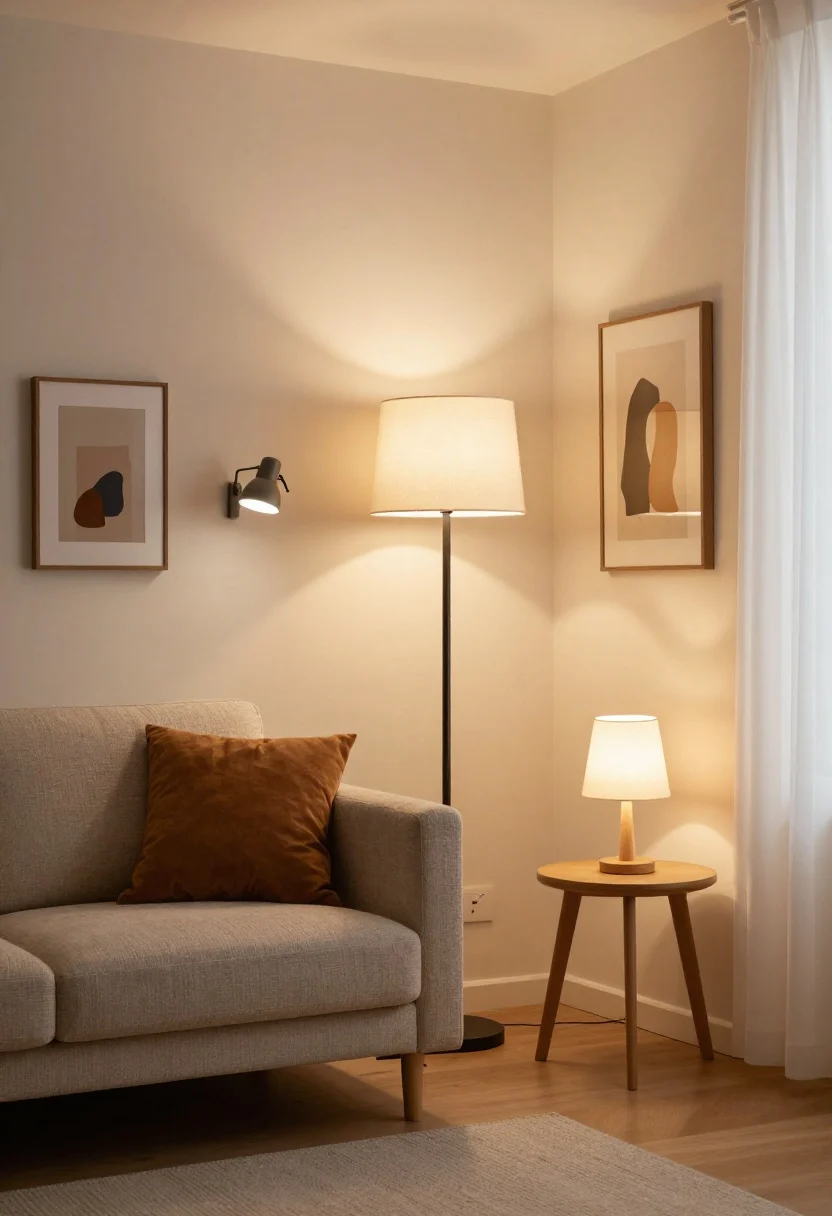
Minimalist doesn’t mean dim. Layered lighting keeps small rooms flexible and cozy without visual clutter.
Your Lighting Trio
- Ambient: A slim floor lamp or flush-mount ceiling light sets the mood.
- Task: A swing-arm wall sconce by the sofa saves floor space and looks editorial.
- Accent: A small table lamp or LED picture light warms up art and corners.
Choose warm bulbs (2700–3000K) and keep dimmers handy. Good light equals instant sophistication.
6. Float Furniture Off The Walls
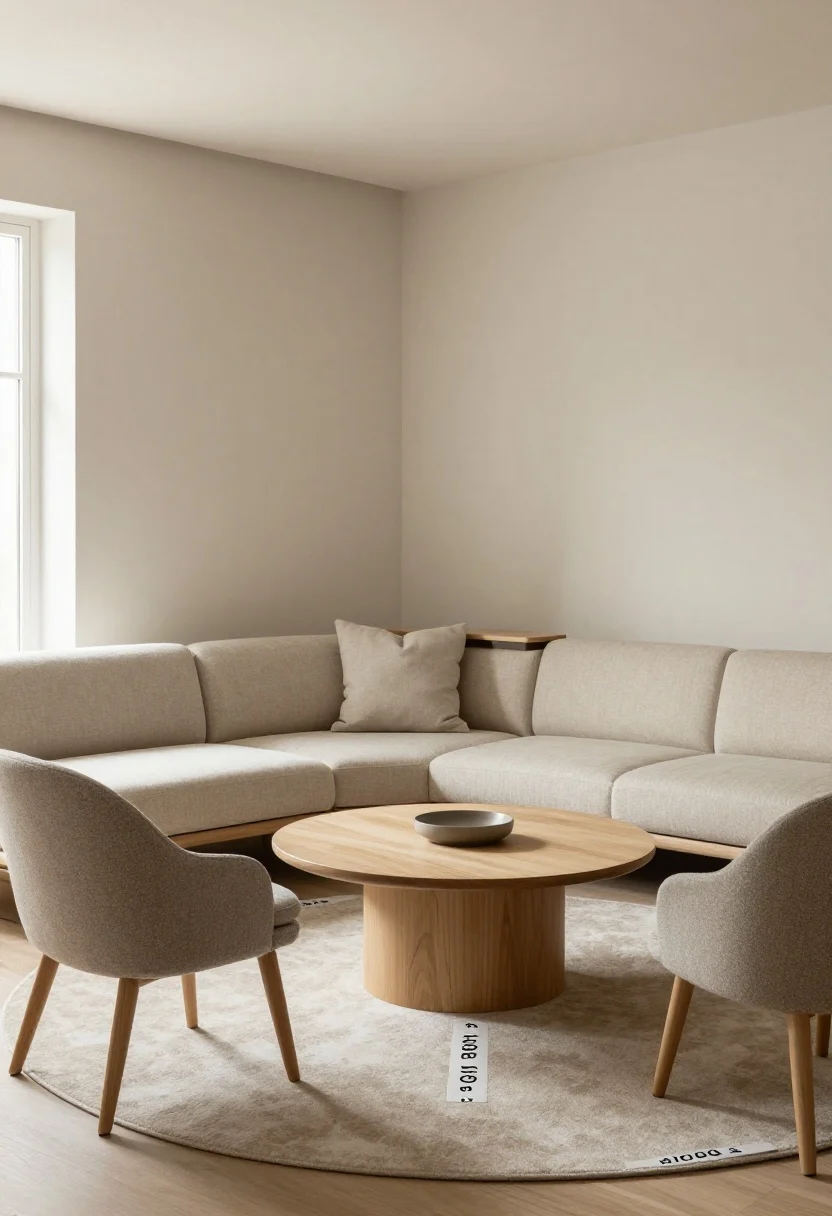
Pushing everything to the edges doesn’t make a room feel bigger—it makes it feel like a waiting room. Pull the sofa forward a few inches and create a defined conversation zone.
Layout Moves That Work
- Conversation cluster: Sofa + two chairs at 90 degrees with a round coffee table keeps flow moving.
- Micro living/dining: If you need a small dining setup, place a drop-leaf table behind the sofa as a console-turned-dining spot.
- Walking paths: Aim for 30–36 inches for main paths, 18 inches around seating where possible.
Even a 4–6 inch pull from the wall changes the vibe from “crammed” to “curated.”
7. Embrace Closed Storage With Clean Lines

Visual clutter is the enemy of minimalism. Store the random stuff (cords, board games, spare chargers) behind closed doors and call it a day.
Minimalist Storage Heroes
- Media unit: Go for a low, handleless cabinet (push-latch doors) in wood or matte lacquer.
- Sideboard: A slim credenza can hold everything from books to extra glassware.
- Ottoman with storage: Your blanket stash just found a new home.
Keep open shelves minimal: stacks of 2–3 books, a bowl, a sculptural vase. That’s it. Resist the tchotchke avalanche.
8. Pick One Big Art Moment (Not A Million Little Frames)
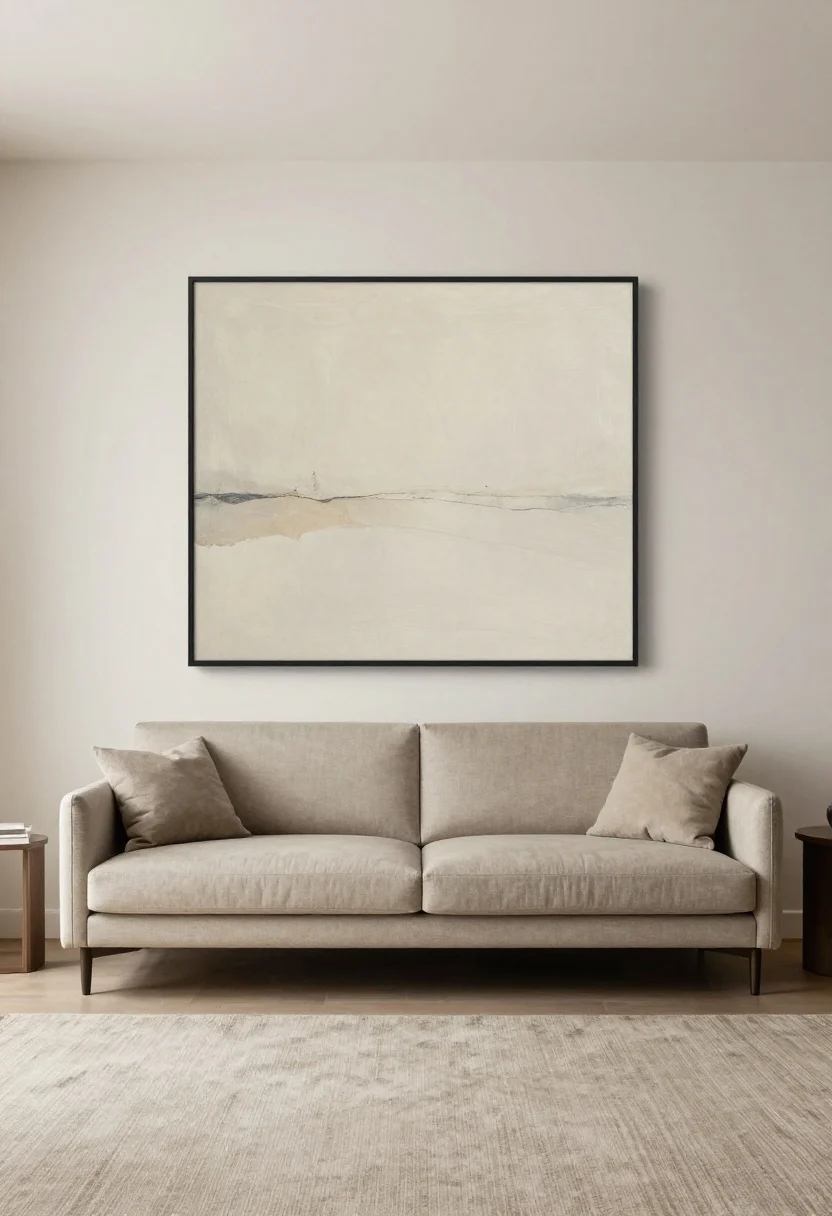
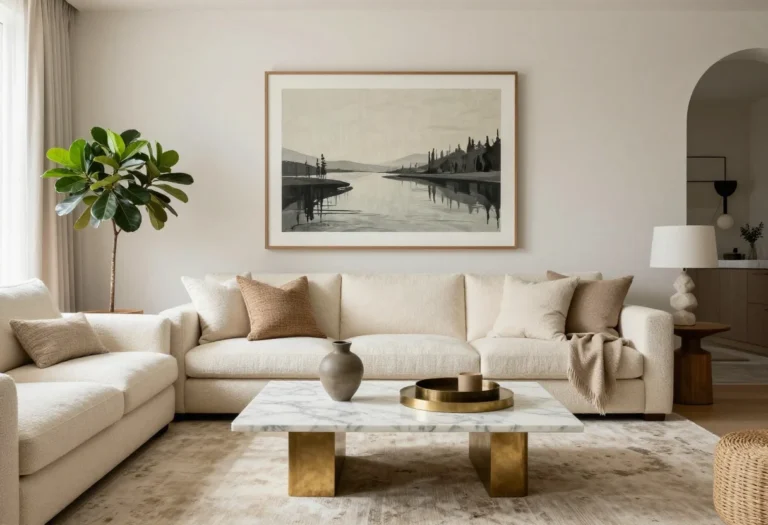
Gallery walls are cute, but in tight spaces they can feel busy. Choose one oversized art piece to anchor the room and give your eye a place to rest.
Art That Sings Without Shouting
- Scale: 60–75% the width of your sofa for a balanced look.
- Style: Abstracts, line drawings, black-and-white photography, or a serene landscape.
- Frame: Thin black, natural oak, or white—consistent with other finishes in the room.
If you love variety, try a diptych for symmetry. It still reads as one statement, just with movement.
9. Curate Texture Instead Of Color Chaos
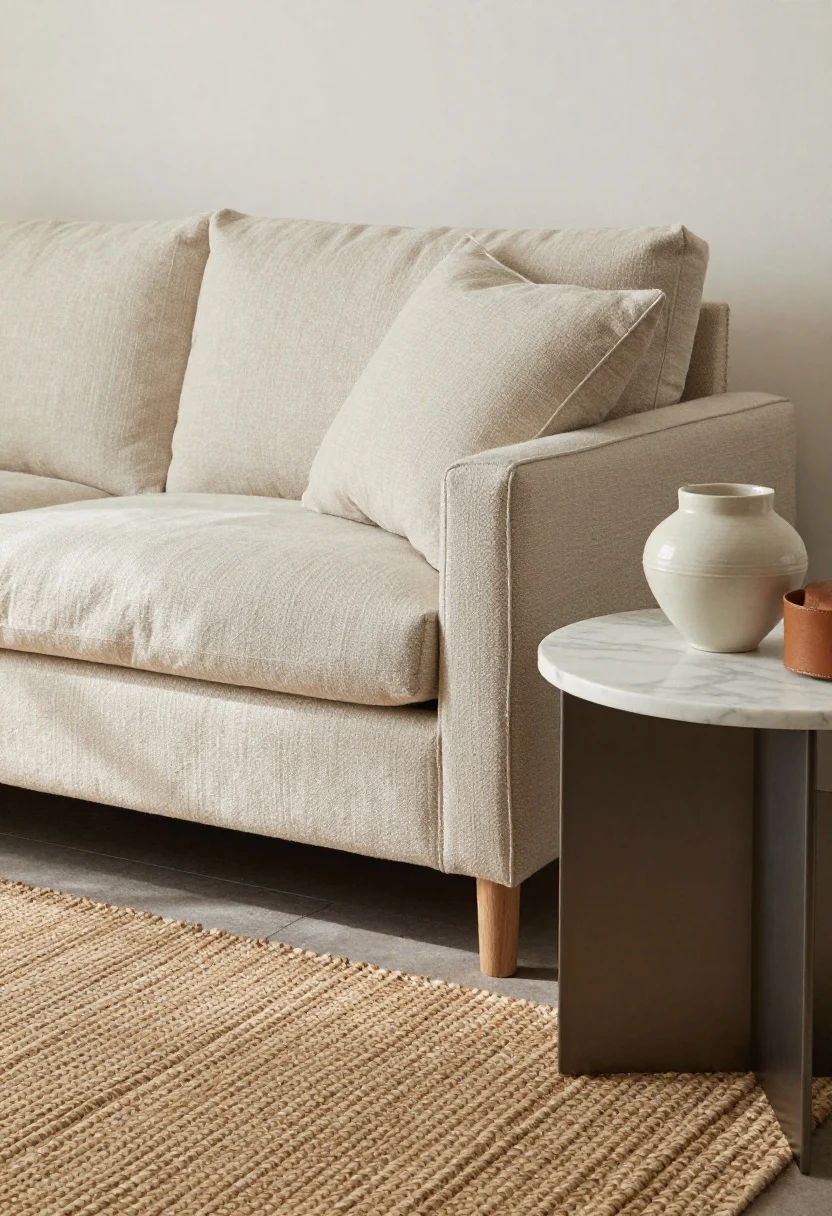
Minimalism doesn’t mean boring. It means texture does the talking. Your palette can stay quiet while your materials bring the interest.
Texture Pairings That Feel Luxe
- Sofa: Linen or bouclé for soft dimension.
- Rug: Woven jute or flatweave wool adds organic texture underfoot.
- Tables: Marble, honed stone, or matte metal for contrast and sheen.
- Accents: Raw oak, ceramic, linen, and leather—keep finishes soft and natural.
Limit prints to one or two subtle patterns. Let the materials be the star, not a dizzying mix of motifs.
10. Use Mirrors And Glass To Double Light
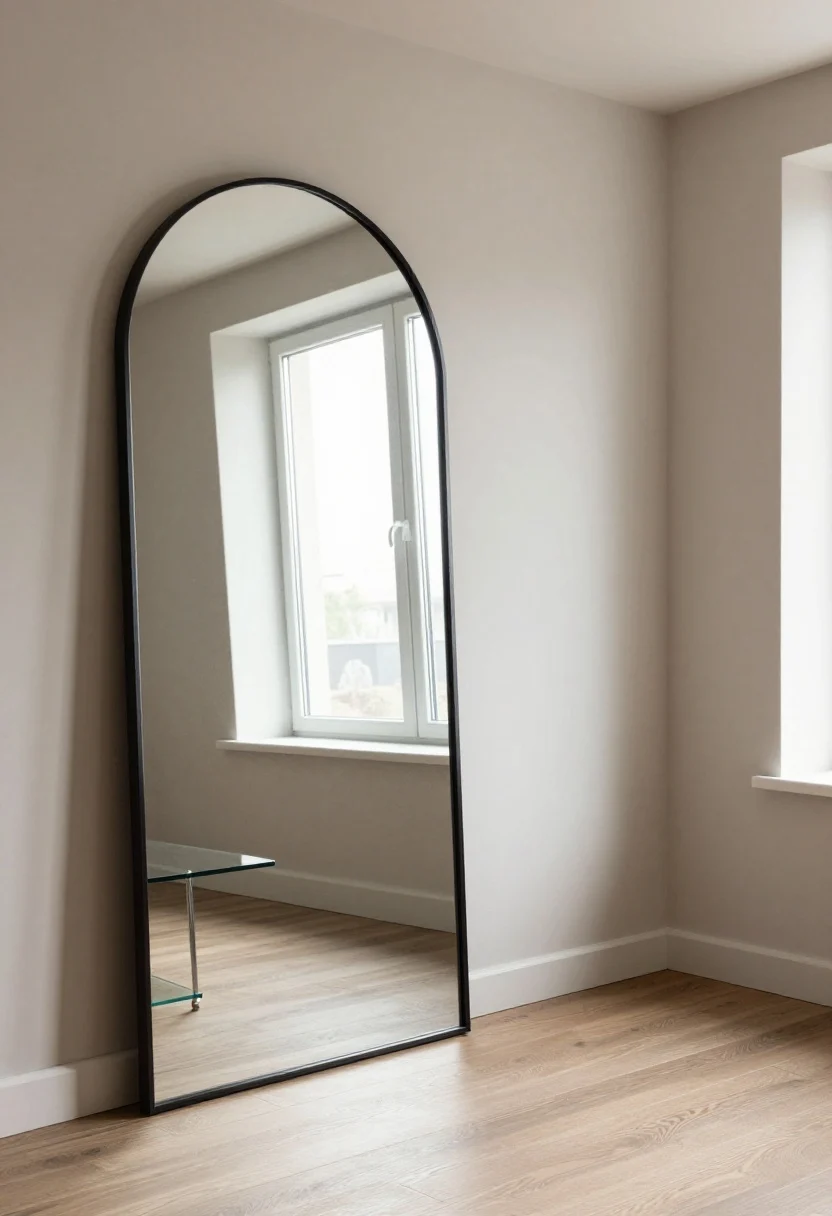
Mirrors are the oldest small-room trick for a reason—they bounce light and open up sightlines. Go for a single large mirror instead of several tiny ones (like, please).
Mirror Magic
- Placement: Opposite a window to reflect natural light or behind a lamp to amplify glow.
- Style: Arched or rectangular with a slim frame. Avoid heavy ornamentation that fights your minimal vibe.
- Glass tables: A glass or acrylic coffee table disappears visually while still doing its job.
Pro tip: a floor mirror leaned against the wall adds height and drama without adding clutter.
11. Keep Styling Tight: The Rule Of Three (And Breathing Room)
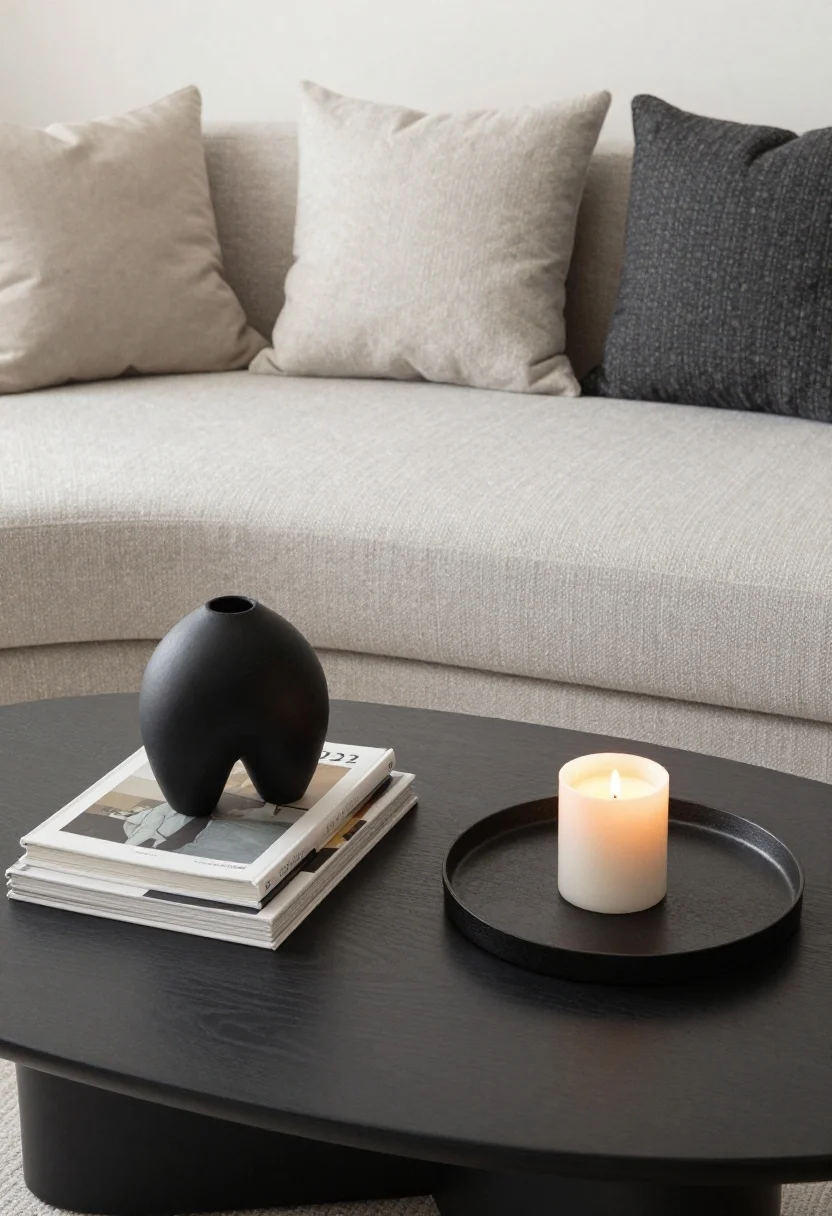
Styling a minimalist space is like plating a beautiful meal—less is more, but it still needs flavor. Follow the Rule of Three and give each vignette space to breathe.
Styling That Looks Effortless
- Coffee table: One sculptural object, one low stack of books, one candle or small bowl on a tray.
- Console: Lamp + art + a single organic form (branch in a vase). Done.
- Cushions: Two to three on a small sofa. Mix sizes (22″, 20″) and textures, not loud colors.
Leave negative space on surfaces. It’s not empty; it’s elegant.
12. Make It Functional: Hidden Tech, Flexible Pieces, Real-Life Habits

Minimalist small spaces win when they actually work for daily life. Hide the wires, pick flexible pieces, and set up tiny systems so the room resets itself fast.
Design For Real Life
- Cord control: Cable raceways along baseboards, adhesive clips behind consoles, and a power strip inside your TV unit.
- Flexible furniture: Nesting side tables, stackable stools, and a pouf that moonlights as extra seating.
- Entry sanity: A wall hook rail and a slim tray by the door keep bags and keys from invading the sofa.
- Daily reset: Five-minute evening tidy: fold throw, clear the coffee table, fluff cushions. Tiny habit, huge payoff.
IMO, the most “minimalist” thing you can do is make cleaning (and hiding) effortless.
Bonus Mini-Guides For Specific Layouts
- Long, narrow room: Use a runner rug to guide the eye, float furniture in pairs, and choose a round coffee table for easier flow.
- Square room: Symmetry helps—sofa centered on art, two matching chairs, and twin table lamps.
- Studio living: Use a low bookcase or open slat screen to zone the “living” from the “sleeping” area without blocking light.
Shop-Smart Suggestions
- Sofas: West Elm Eddy, Article Sven, or a bench-cushion IKEA SÖDERHAMN for modular flexibility.
- Tables: CB2 glass or marble tops with slim bases; nesting tables to save space.
- Lighting: Plug-in sconces from Schoolhouse or George & Willy for renter-friendly installs.
- Rugs: Revival, Nordic Knots, or a flatweave from Rejuvenation for subtle texture.
- Storage: IKEA Besta with push latches—clean fronts, custom looks with wood tops.
Common Minimalist Mistakes To Avoid
- All white everything: Without texture, it feels sterile. Layer materials.
- Teeny-tiny rug: Makes the room feel smaller. Size up.
- Too many small accents: One big piece beats six small ones every time.
- Harsh lighting: Cool bulbs kill the vibe. Stick to warm tones.
Minimalist style in a small living room isn’t about owning less joy—it’s about making more space for it. Choose pieces with intention, keep your palette calm, and let texture and light do the heavy lifting. You’ll be surprised how quickly the room starts feeling serene, stylish, and totally you. Ready to edit one shelf and swap one lamp? That’s how the magic starts.